June 18, 2013
AT&T to Introduce Solar-Powered Charging Stations
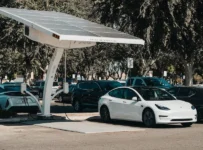
As of today, 25 solar-powered charging stations will be set up in parks, beaches and other outdoor spaces in the five boroughs as part of a pilot project from AT&T in partnership with New York city.
[via The New York Times]
June 13, 2013
Self-Charging Cell Phone Screens Coming Soon
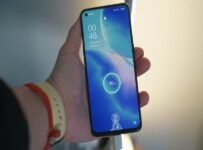
Sunpartner Group's Wysips technology (for What You See Is Photovoltaic Surface) can transform any surface into an energy-producing component.
Using the unprecedented combination of optical and photovoltaic properties, the Group has produced an ultra-thin, transparent component.
Thanks to a low-cost transparent panel, mobile phones should use solar power to charge themselves.
Sunpartner is working with a number of manufacturers and expect to see it built into mobile devices early next year.
[via IEEE Sepctrum]
June 12, 2013
Study Confirms Hands-Free Texting While Driving Is Unsafe
Using voice text messaging, included in systems such as Ford's'Sync and Toyota's Entune, is more distracting to drivers than making calls with handheld mobile phones, a study by AAA found. Bloomberg reports.
Texting a friend verbally while behind the wheel caused a "large" amount of mental distraction compared with "moderate/significant" for holding a phone conversation or talking with a passenger and "small" when listening to music or an audio book, the University of Utah study found in a report released by AAA today.
Automakers have promoted voice-based messaging as a safer alternative to taking hands off the wheel to place a call and talk on a handheld phone. "As we push towards these hands-free systems, we may be solving one problem while creating another," says researcher Joel Cooper.
Read full article. Report: Measuring Cognitive Distractions.
Searching for Alien Life, One Text at a Time
On June 18, space-technology startup Lone Signal plans to start sending text messages and photos into deep space, toward a distant star. The company has leased a radio telescope to beam the messages. Business Week reports.
The scientific part of the message will be sent continuously as a way to alert anyone out there that we are here and have fully sorted hydrogen, the universe's most abundant element. The other part is capitalistic, a social-media venture to allow the deep diversity of humanity to send personal messages and images across deep space.
Read more.
>>> Register a free account
Mobile phone sales to reach 1.86 billion this year
According to CCS Insight's new market forecast, over 6.6 billion mobile phones will be in use by the end of 2017, two thirds of which will be smartphones, up from less than 25% in 2012. Intomobile reports.
More than 50% of mobile phones in use in Western Europe and North America are already smartphones, and CCS Insight predicts this figure will grow to more than 80% in 2015. However, beyond 2015 - much of the growth will come from emerging markets.
Read more.
My (devastating) Malware Warning Experience
All of my blogs were unaccessible last Saturday through Monday.
A "Danger: Malware Ahead!" message replaced the home pages of textually.org, 3DPrintingBuzz.com and netsurf.ch, courtesy of Google Chrome, followed by Firefox and Safari as they day went on.
Chrome's message on netsurf.ch had a slightly different text with a defamatory claim describing textually.org as "a known malware distributor".
Let me point out that Textually has been covering cell phone usage since 2003 and is NOT a "known malware distributor"!

Within hours all searches in Google for textually.org pages had the mention: "This site may harm your computer".
My wonderful tech person identified a line of code, installed through a back door of MovableType, removed it and updated to the latest version of MT.
The textually website resubmitted to Google Monday night got a quick response. By Tuesday morning all malware signs had been removed, from all browsers and search engines.
The New York Times, the Washington Post, The San Francisco Chronicle and The Verge had the same thing happen to them in February. In their case it was a malicious code that was installed through an ad network.
It has been my worst experience online in 18 years of publishing.
I have several thoughts:
Though in theory a warning message is welcome to protect viewers from exposure to malware, the fact that the warning message is automated, depicting worst case scenarios (identity theft, financial loss, permanent file deletion) - which may not be the case - can lead to unjustly devastating consequences to website owners, affecting their search engine ranking and more importantly, the loss of viewer confidence.
Google is using it's tremendous power to become the Internet police. And there is nothing we can do about it.
Rwanda strikes 4G internet deal with South Korean telecoms firm
Rwanda's government has announced plans to provide high-speed 4G internet to almost its entire population within three years after striking a deal with South Korea's biggest telecoms provider.
[via The Guardian]
Bill would force you to give police phone after accident
New Jersey legislators propose Bill S 2783 (pdf) allowing police to examine your cell phone without a warrant in the event of an accident. C/net reports.
Whenever an operator of a motor vehicle has been involved in an accident resulting in death, bodily injury or property damage, a police officer may confiscate the operator's hand-held wireless telephone if the officer has reasonable grounds to believe that the operator was operating a hand-held wireless telephone while driving.
Read full article.
How Mobile Phones Can Improve Health Care
Obstetric fistula, an abdominal injury that occurs in unattended childbirth and causes incontinence, is among the most intractable challenges of extreme poverty. Bloomberg reports.
In Tanzania, a pilot program that relies on mobile-phone communication hasbrought fistula sufferers in remote areas to a central hospital for reparative surgery.
In 2009, hospital staff members, with support from the United Nations Population Fund, decided to find the patients. They assembled a countrywide network of volunteers and armed them with mobile phones and basic training to identify potential patients.
Candidates were then diagnosed over the phone; those who appeared to be suffering from obstetric fistula were sent money for bus fare ($30 on average) through a mobile-phone money-transfer service, in care of the volunteer. Volunteers, in turn, received small incentive payments (about $3.50 a referral). This strategy has more than tripled the hospital's fistula operations, from 150 in 2009 to 500 last year.
Read more.
Beer glass stops drinkers from using their mobile phones
The Offline Glass
features a large indent in its base which means it will only stand upright when supported by a mobile phone.
According to The Telegraph:
The glass, designed by advertising agency Fischer & Friends , was unveiled at the Salve Jorge bar in Sao Paolo. Hopes are high that the glass will give drinkers little chance but to ignore their phones in favour of their companions.
June 11, 2013
Interactive pajamas tell bedtime stories
In addition to keeping kids snug, smart pajamas can also read a bedtime story. PSFK reports.
Smart PJ's are designed with a series of scannable dot patterns that can interact with smart devices. Once scanned, children and parents alike can enjoy a bedtime story being read from a smartphone.
How does it work?
1. Download the free app.
2. Put on the Smart PJ's.
3. Scan one of the many different codes from the Smart PJ's with your smart device.
4. Read or listen to the story that comes up and look at the pictures
Read more.
Modem to improve African net access
A modem designed specifically for Africa has been announced at the TEDGlobal conference in Edinburgh. The BBC reports.
... The BRCK works like a mobile phone, switching between wi-fi and 3G when a fixed line network is down.
Users can also plug in a SIM card to offer a network anywhere in reach of a mobile tower.
The BRCK has an eight-hour battery and also has a cloud-based software which means it can be accessed from anywhere to see how wi-fi and electricity are performing or to manage alerts and applications.
For remote villages where even a mobile signal is hard to find, there is also an antenna to boost signal strength.
Read more.
Daily inspiring text messages fail to inspire US students to perform better
A groundbreaking experiment that bombarded US high school students with inspiring text messages was found to be a success on all counts except one: it made no difference to how the students performed in school. The Guardian reports.
Roland Fryer, an economist at Harvard University, helped establish the experiment involving nearly 2,000 pupils at state schools in Oklahoma City.
The students were given free mobile phones in return for receiving daily texts written by a trend-setting advertising agency, encouraging them to stay in school and study for exams.
The aim of the study was "to assess whether students better understood the link between human capital and outcomes", Fryer wrote in a working paper just published by the National Bureau of Economic Research.
The texts were sent at 6pm each day, including weekends - calculated as the best time to reach the sixth and seventh grade students, aged 12-13.
Some pupils could earn additional airtime credits by reading books and responding to questions.
As to why the study failed to improve academic outcomes, Fryer suggested it could be because the students only had a vague idea how to increase their achievement once they had been motivated.
Read full article.
June 7, 2013
Damaged cell phones newest status symbol
Young people are turning their cracked cell phone screens into the latest in shabby chic. Or is that trashy tech? via
Whatever it is, it's catching on as fast as torn T-shirts and ripped bluejeans. Once considered mortifying -- damage requiring immediate repairs or replacement -- the spider webs of a cracked smart phone screen increasingly are seen by teens and 20-somethings as inevitable badges of honor, cool battle scars that impart a kind of rough street cred in the mobile world.
Read more.
Pew: Cell phone ownership hits 91% of adults
For the first time, the Pew Research Center�s Internet & American Life Project has found that cell phone ownership among adults has exceeded 90%. Cell phones are now being used by 91% of adults, according to the survey conducted between April 17 and May 19 of 2,252 adults.
While the adoption figures are stunning by every measure�the cell phone is the most quickly adopted consumer technology in the history of the world� there are some demographic groups whose embrace of the cell phone is somewhat less avid than others.
Those groups are: people ages 65 and older; those who did not attend college; those living in households earning less than $30,000; and those in rural areas. In this survey, it is even the case that women are statistically significantly less likely to own cell phones than men�though this pattern has not been evident in all of our previous surveys.
Pew Internet reported yesterday that a big part of the cell adoption story is the rise of the smartphone. In this same survey, we found that 56% of American adults have smartphones.
Read full report.
The Feds� �Ultimate Solution� to Curb Distracted Driving
Distracted driving kills more than 3,000 people each year in the United States, a figure that represents about 10 percent of all traffic fatalities. How many of those people die because they were fiddling with their phones or navigating their navigation systems isn�t clear, but no matter. The feds say they�ve got �the ultimate solution� for curbing the use of mobile devices while we�re mobile. Wired reports.
One idea, proximity sensor, in the vehicle or the device, that recognizes when the driver is using the device and requires them to pass it off to a passenger. Think of a seatbelt chime, but more annoying.
Federal regulators want to make it impossible for you to send a text, update Facebook or surf Instagram while driving, a campaign that could have as big an impact on mobile phone manufacturers as automakers. This spring, the NHTSA and its parents at the Department of Transportation laid out � in a 281-page report (.pdf) � several guidelines for accomplishing this.
Read full article.
June 6, 2013
A Sexy iPhone Case That Shields Your Brain From Radiation
Gold Reveal is the newest offering in Pong�s lineup of radiation-deflecting phone and tablet cases. Wired reports.
With a sleek frame in rich colors and a latticed back that reveals a hint of gold metal, the case is an upgrade from the other clunky plastic options on the market.
But more importantly, Gold Reveal is as effective as Pong�s original designs in protecting users from the electromagnetic radiation our cellular and wireless devices emit.
Related: - Anti-Radiation Products With Some Science in Them
iPhone5 case which acts like iPad smart cover bought out by Logitech

The TidyTilt is like the iPad Smart Cover. Magnetic, it folds over to act as a stand for your iPhone. Mashable reports.
Since the Kickstarter project received more than $200,000 in donations when it only asked for $10,000. Logitech took note of its success and decided to snap up the innovative case and designers behind it.

STD advice by SMS in Uganda spurred infidelity instead
Google Inc. and the Grameen Foundation set out to improve awareness of sexually transmitted diseases and reduce risky behavior in rural Uganda through text messaging. Instead, the program spurred infidelity. Newsday reports.
Participants in the project texted questions on sexual health topics to a service set up by Google, Grameen and the local mobile-phone provider. Using its search technology, Google worked with Grameen to develop a way to pick up key words in the texts and reply with templated answers. Infidelity jumped to 27 percent from 12 percent of those involved in the project, one of the findings of a soon-to-be published Google-funded study by Innovations for Poverty Action, a non-profit organization.
The unexpected result exposes kinks in the growing field of mobile health, which is bringing together technology companies, wireless carriers, drugmakers and non-profit organizations to explore applications ranging from diagnostics to disease tracking.
Read full article.
You Can Pay for Laptops and Smartphones Using Sheep in West China
An electronics dealer in Kashgar, Xinjiang has recently started accepting a rather old form of payment in return for his gadgets: sheep. Tech in Asia reports.
According to the China Daily, 29-year-old Huang Jie decided to start accepting sheep as a way of encouraging rural people in the region to buy gadgets, and making them seem affordable by putting their prices in terms that were more relatable.
As of June 2, apparently no one has yet actually paid for an electronic device using sheep, but Huang must be hoping it�s a matter of time.
Here's a chart of the going rate:

Smartphones hanging from trees will listen for the sounds of chainsaws to save Indonesian forests
A forest project that uses solar-powered smartphones hanging from trees to listen for the sounds of chainsaws could help stop illegal logging. New Scientist reports.
Non-profit Rainforest Connection, based in San Francisco, is launching a pilot project this month in the forests of Indonesia that uses modified Android smartphones to record and identify the sound-signatures of chainsaws.
... The phones are outfitted with solar panels specifically designed to take advantage of the brief periods when light reaches the forest floor. Their microphones stay on at all times, and software listens for the telltale growl of a chainsaw, which triggers an alert.
Initially, only rangers will be notified, but White hopes to release a free app that lets anyone receive real-time alerts with the audio that the phones pick up and the location. "We want to make people feel like they are taking part in the dramatic events on the front lines of environmental protection," he says.
Read full article.
June 5, 2013
Egypt medics perform surgery by 'mobile-phone light'
Egyptian doctors had to use the light generated by their mobile phones to perform surgery after a sudden power cut at a hospital, al-Masry al-Youm newspaper reported.
The patient was about to have a minor gall-bladder operation when the lights went out in the southern city of Qina.
The provincial governor later ordered an urgent inquiry, saying there was no excuse that the hospital's back-up generator did not work.
[via the BBC]
Similar stories blogged by textually over the years - oddly all in 2007.
-- Vietnamese doctors use mobile-phone light to finish surgery (2007)
-- Cell phones light up operating room during blackout in Argentina (2007)
-- Vietnamese doctors use mobile-phone light to finish surgery (2007)
Mobile Phones And Clothes Are Important Status Symbols For Chinese Farmers
Relative status is important to Chinese farmers. For women, spending money on clothes, restaurants and mobile phones signals status; mobile phones serve the same function for men. All of this is found in a new doctoral thesis from the University of Gothenburg, Sweden.
[via RedOrbit]
Thesis by Fredrik Carlsson, Ping Qin: It is better to be the head of a chicken than the tail of a phoenix: Concern for relative standing in rural China.
Functional keyboards and interfaces can be projected onto hands
Futuristic technology allows you to beam movies and your home screen onto the palm of your hand. PSFK reports.
Researchers from Masatoshi Ishikawa and the University of Tokyo are working on a new �human-tech� project that allows for mobile phones, computer screens and keyboards to be beamed onto palms or any moving objects.
Read more.
Pianist Krystian Zimerman storms out over phone recording
One of the world's leading pianists has surprised concertgoers by storming off stage because a fan was filming his performance on a smartphone. The BBC reports.
Krystian Zimerman, 56, returned moments later and declared: "The destruction of music because of YouTube is enormous."
He carried on with his recital, but chose not to perform an encore and cancelled a post-concert reception.
The Polish pianist joins several high-profile musicians who have spoken out against filming.
Read more.
Ericsson Mobility Report: LTE and smartphone uptake drives video traffic growth
Video traffic is growing on the mobile networks by 60 percent annually according to Ericsson's new mobility report via GigaOM.
Some highlights from the report:

-- Video traffic growing by 60 percent annually, driven by better network speeds
-- Total global smartphone subscriptions hit the 1.2 billion mark in 2012, and are due to reach 4.5 billion by the end of 2018
-- 60 percent of the world's population due to be covered by LTE in 2018
-- Smartphone users spend most time on social networks: an average of 85 minutes a day in some networks
-- Data traffic volumes doubled between Q1 2012 and Q1 2013, and are expected to grow 12-fold by 201
Read full article. Ericsson Mobility Report: LTE and smartphone uptake drives video traffic growth
June 3, 2013
Print Ad Charges Phone Using Solar Energy
Nivea has come out with a print magazine ad which is a solar power charger for your phone. According to PSFK:
The ad promotes Nivea�s Sun line which includes an ultra-thin solar panel and phone plug. The panel on the sunscreen ad is made of solar material that captures the suns rays, converting it into energy for your phone which plugs in via the port.
Read more.
May 31, 2013
Mobile phone 'text-speak' boosts children's language skills
Children should be taught �text-speak� at school to prepare them for the demands of studying a foreign language, according to one of Europe�s top linguists. The Telegraph reports.
Mobile phone text message abbreviations such as �lol�, �gr8�, �l8r� and �b4� should be used as a starting point for analysing language creativity in lessons, it is claimed.
Waldemar Martyniuk, executive director of the Council of Europe�s Centre for Modern Languages, also suggested that schools should be encouraged to teach children about slang and regional dialects.
These subjects are vital to allow children to develop a �sense of adventure� in language that could act as a stepping stone to eventually learning foreign languages, he said.

Read full article.
Related links to articles on both the positive and negatives studies of text messaging on language and writing skills, blogged by textually over the last 10 years.
Study looks at mobile medical app overload and has suggestions to correct the problem
Key issues of the App Overload study presents, according to the authors, include: (1) users have difficulty identifying the right app, and (2) overload causes a fragmentation of information/features over multiple apps [1]. As such, users may be disinclined to utilize mobile medical applications and become hesitant of their usage. iMedical reports via @jranck.
In order to combat this substantial growth of medical apps, the authors recommend two changes:
-- First, apps should become gateway portals to quality-information that is open sourced. For instance, the authors suggest that information from the CDC should be utilized across multiple applications as open sourced information.
-- Secondly, medical content should be standardized across mobile apps so that information follows the same content presentation. The authors� example encompasses comparing two apps that go over tick removal, with one telling users what to do and another what not to do.
Read full article.
Kenyans Find the Unintended Consequences of Mobile Money
In Western Kenya, �Sambaza� is both a marketing slogan and means for despair. It means �to spread.� Bloomberg Businessweek reports via @ranck.
Vodafone-owned Safaricom, the dominant mobile provider in Kenya, uses it as a brand name for a service that allows customers to transfer airtime to each other. According to a new study (pdf) funded by the Institute for Money, Technology and Financial Inclusion (IMFTI), the word has also come to refer to the way money in a mobile account slips away, drip by drip, as friends and family ask for favors.
People who work in economic development use the term �unbanked� to describe the roughly one in three people in the world who don�t have a formal bank account. They represent 60 percent of adults in developing countries and 77 percent of adults making less than $2 a day.
According to a paper published in March that looked at text and call data in three African countries to figure out what drives adoption of mobile money, the authors discovered a gap between rich and poor. First, you�re more likely to use mobile money if you�re more likely to make calls and send texts. That is, you�re more likely to use mobile money if you�re spending money already anyway. Second, people with more contacts who have mobile money accounts are more likely to have accounts themselves. This is true in each country, regardless of how developed the mobile money market is.
So data show that, even within poorer countries, the poor lag the rich in mobile money adoption.
Read more.
Mobile traffic still only makes up 15% of all worldwide Internet traffic
Mobile traffic still only makes up 15% of all worldwide Internet traffic. That is less than one-sixth of all time spent on the Internet. ReadWriteWeb reports.

That means there is still plenty of work to be done and a lot of winners and losers to be determined.
According to Mary Meeker�s report at the AllThings:D D11 conference in Los Angeles, this is Year 6 of the Mobile Revolution (if we date the start of mass smartphone acceptance to the release of the original iPhone in July 2007). There are 1.5 billion smartphones users in the world, or about a 21% penetration rate of mobile users. Compared to the nearly 5 billion global cellphone users, smartphones still have a long road to climb. Believe it or not, in the big picture, smartphones are still in the early stages of adoption.
If we start to break down the geographic demographics, some familiar trends emerge.
-- The U.S. has one of the highest smartphone penetration rates in the world: 219 million smartphone users, 58% of the consumer public.
-- China, too, has a huge smartphone subscriber base, far and away the highest volume in the world at 354 subscribers (yet just 29% of total consumer base).
-- Japan has the highest smartphone penetration rate: 76% with 94 million users.
... If there is really a remaining battle in the Smartphone Wars, it has less to do with Apple vs. Google vs. Microsoft vs. BlackBerry and more to do with the race to connect the rest of the world to the Internet through mobile. The company that can best figure out how to solve that diverse and complex global problem will be in a great position to succeed for the decade to come.
Read full article.